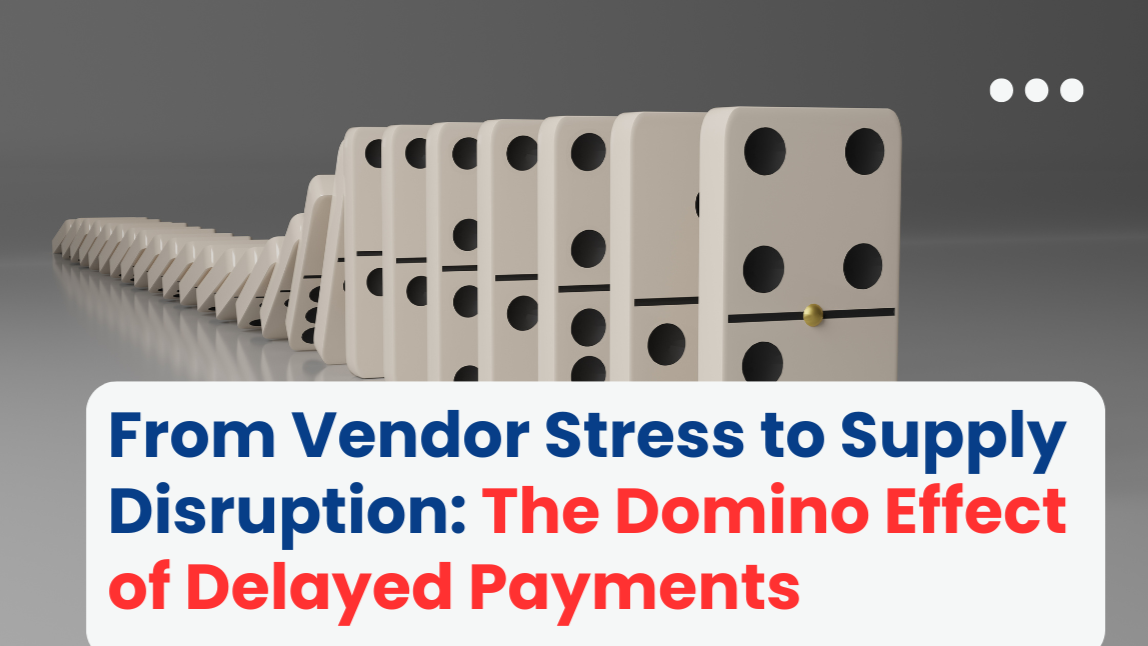

Late payments are often treated as a finance issue.
They’re not.
They are operational risks waiting to surface.
In many large organisations, delayed vendor payments are normalised. A few extra weeks. A stretched credit cycle. An internal approval delay.
On paper, it looks manageable.
In reality, it quietly weakens the supply chain.
The First Crack: Vendor Stress
When payments are delayed, vendors don’t shut down immediately.
They absorb the shock.
They:
- Borrow short-term at high interest
- Slow hiring
- Delay their own supplier payments
- Cut operational buffers
For MSMEs especially, even a 30–60 day delay can strain working capital.
And when multiple large buyers delay payments simultaneously, stress compounds quickly.
The Second Crack: Production Timelines Slip
Vendor stress soon becomes operational friction.
Suppliers begin to:
- Prioritise customers who pay on time
- Slow dispatches
- Limit inventory buffers
- Reduce flexibility in urgent orders
What was once a reliable 7-day turnaround becomes 10 or 14 days.
Production teams feel it first.
Deadlines tighten. Schedules shift. Internal pressure builds.
The business hasn’t “lost demand”—but it has lost smooth execution.
The Third Crack: Pricing Power Shifts
When trust weakens, pricing changes.
Vendors begin to:
- Increase quoted prices
- Remove credit flexibility
- Add risk premiums
- Demand advance payments
The cost of delayed payments eventually returns to the buyer—just in a different form.
Margins quietly erode.
The Fourth Crack: Emergency Procurement Costs
When vendor relationships deteriorate, companies are forced into reactive decisions:
- Urgent alternate sourcing
- Higher-cost suppliers
- Expedited logistics
- Premium procurement pricing
Emergency buying is almost always expensive.
And it is almost always preventable.
The Final Crack: Trust Erodes
Supply chains are built on trust more than contracts.
When vendors feel uncertain about payment timelines:
- Communication becomes cautious
- Collaboration reduces
- Innovation slows
- Long-term commitment weakens